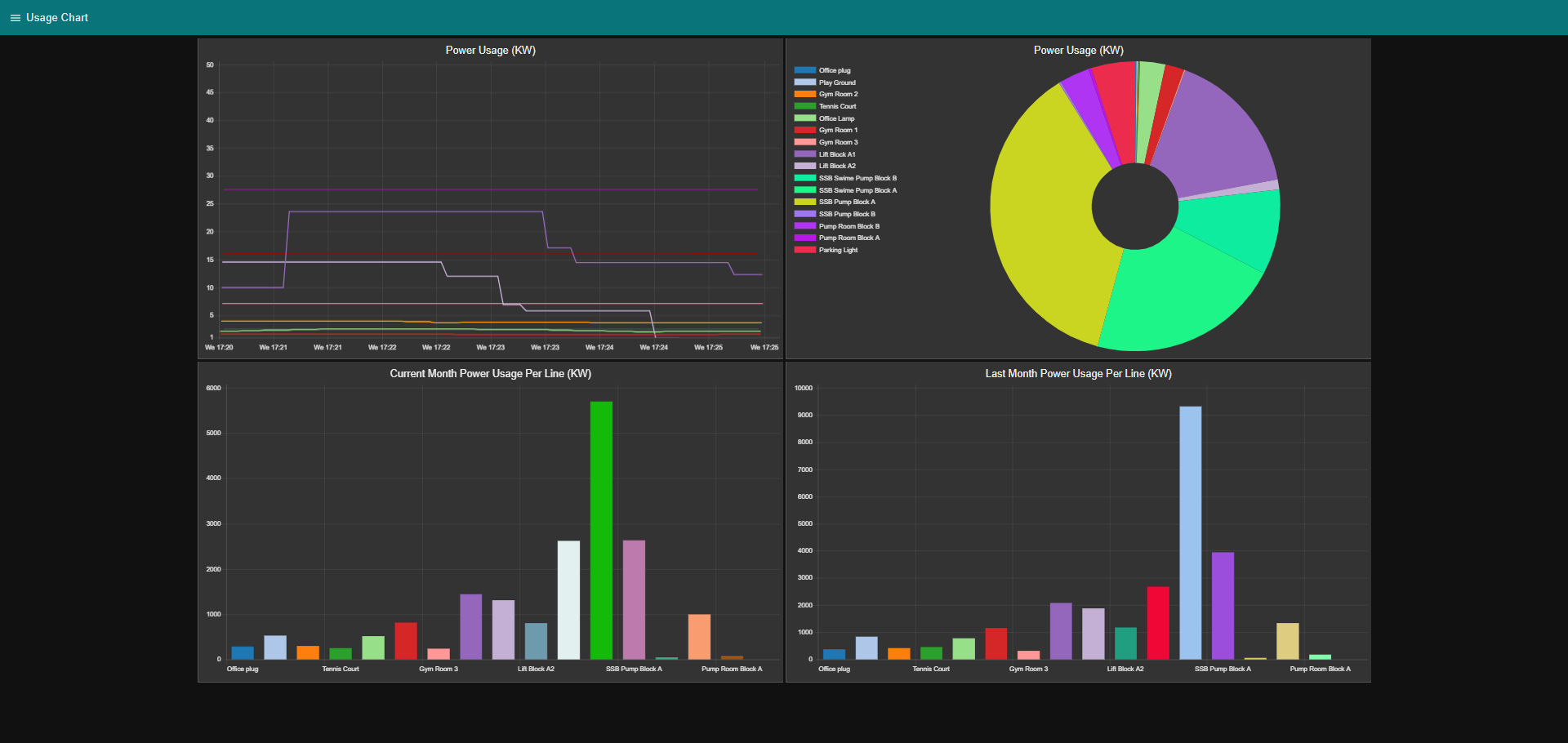
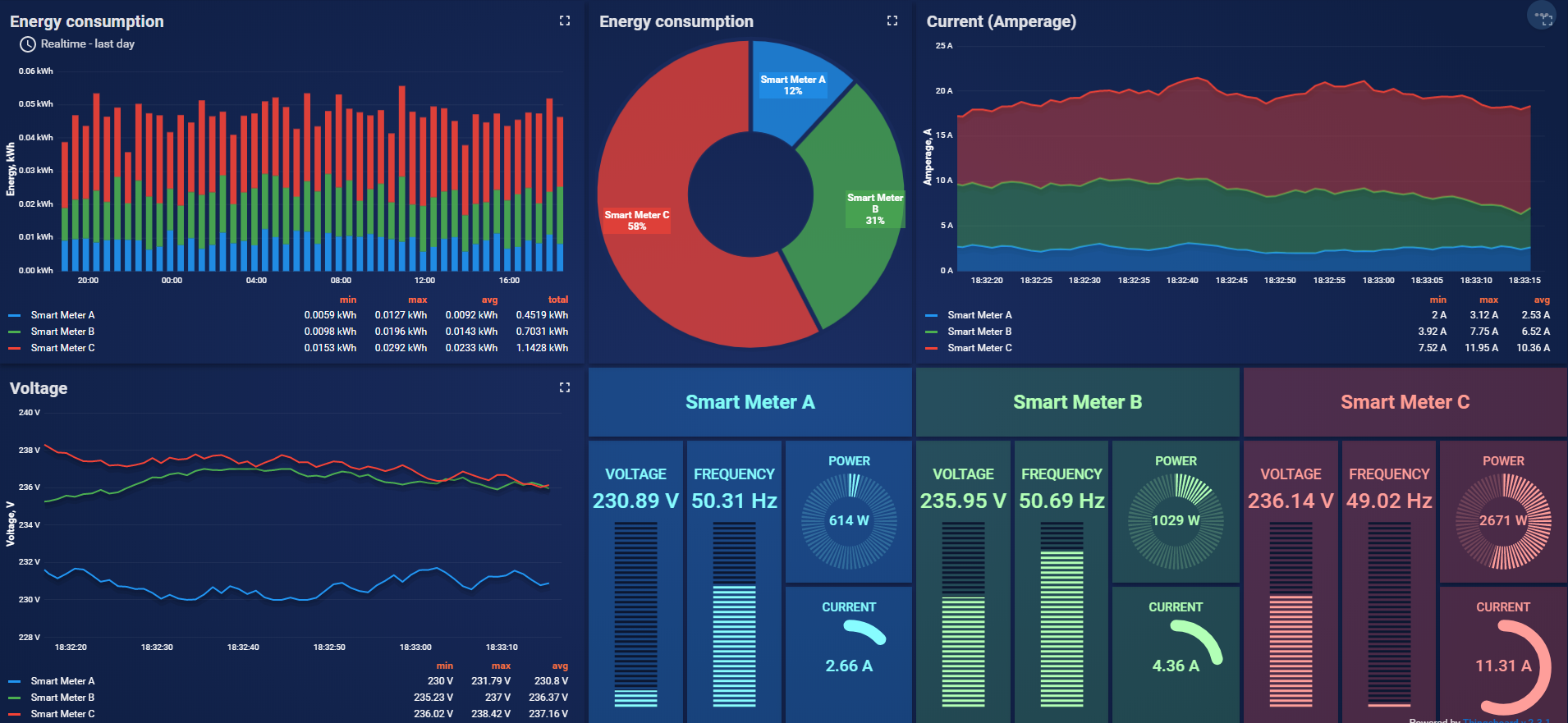
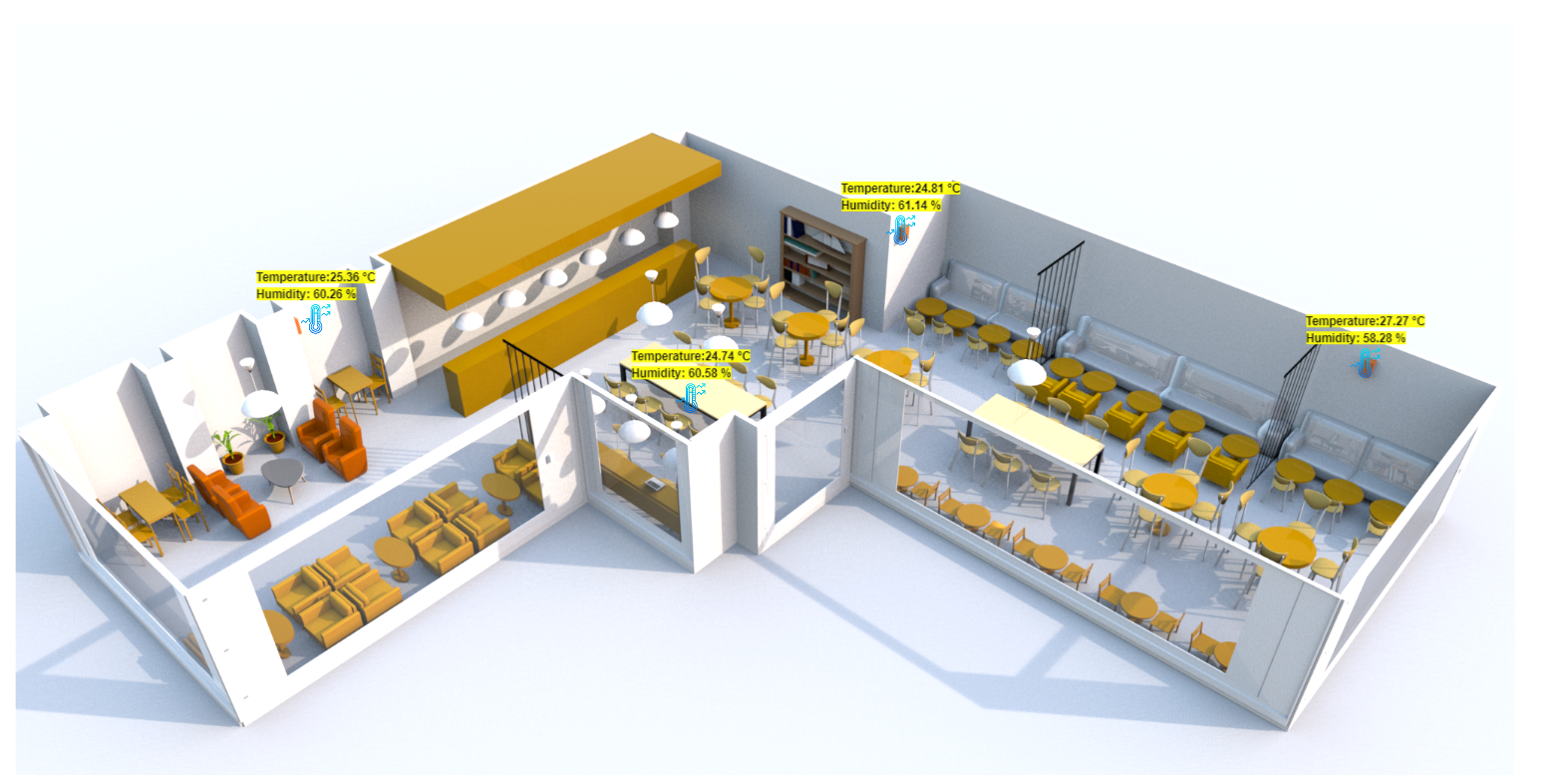
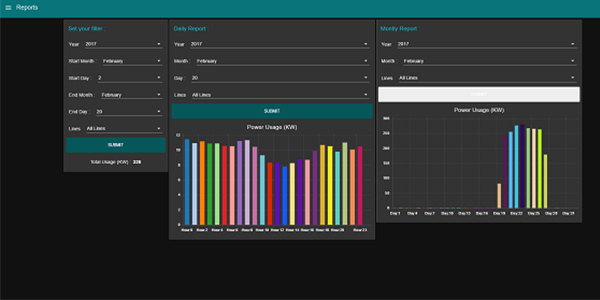
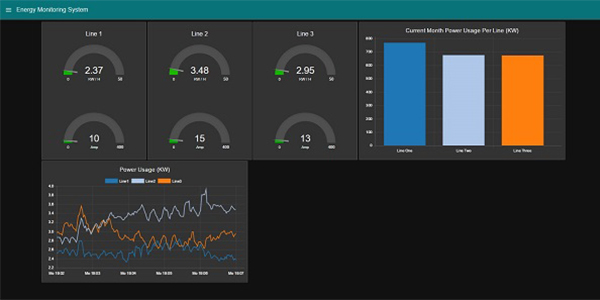
Energy information is often divided between utility bills, meter displays, panel readings and separate control systems. That makes practical questions difficult to answer: What is the normal load for this site? Which equipment runs after hours? When do demand peaks occur, and what changed before they appeared?
Skymics develops connected energy-management and monitoring solutions around those questions. We bring meters, sensors and relevant operational data into a clearer view for facilities, energy and operations teams.
Build a useful energy baseline
A project can begin with existing interval meters or include additional measurement points where more detail is needed. Organise data by site, panel, circuit, area or equipment, depending on the installation and the decisions the team needs to make.
Skymics provides sensor integration, edge gateways and industrial protocol bridging. Existing telemetry or supervisory control and data acquisition (SCADA) systems can be assessed for integration. Choose communications, including LoRaWAN where suitable, around the measurement frequency, payload and operational requirements.
Context gives readings meaning. Align operating hours, weather, occupancy, production schedules or tariff periods with energy data when relevant and available. A useful baseline should reflect how the site actually operates, not just last month’s total consumption.
Turn energy patterns into practical actions
A connected monitoring view can help teams:
- identify recurring loads outside operating hours;
- compare demand across shifts, areas or operating periods;
- review the timing and duration of demand peaks;
- investigate changes in selected circuits or equipment;
- compare patterns before and after an operational adjustment; and
- identify missing or inconsistent readings that need checking.
For example, a sustained overnight load may justify reviewing schedules and equipment run states. The reading starts an investigation; it does not, by itself, prove that equipment is faulty or energy is being wasted.
Apply AI to a defined energy question
With suitable history, predictive analytics can forecast short-term demand or estimate an expected consumption range. Anomaly detection can highlight departures from that pattern, taking agreed operating context into account. Evaluate useful warning time and false alerts before using the output in daily operations.
Edge machine learning can be considered when analysis should run closer to a meter or gateway. Hardware, connectivity and response requirements determine the design. AI findings support operator review; automatic load switching requires separately agreed controls and safeguards.
Any savings claim needs a measured baseline and a like-for-like comparison that accounts for operating changes. Monitoring or AI alone does not guarantee a lower bill.
AI and ML analytics
Discuss an energy-management requirement
Tell us about your facility, existing meters, available data history, equipment of interest and the reports or forecasts your team needs. Start with a defined area and energy question, then assess the results before expanding.